
A barista's honest comparison to help you choose the perfect pour-over dripper
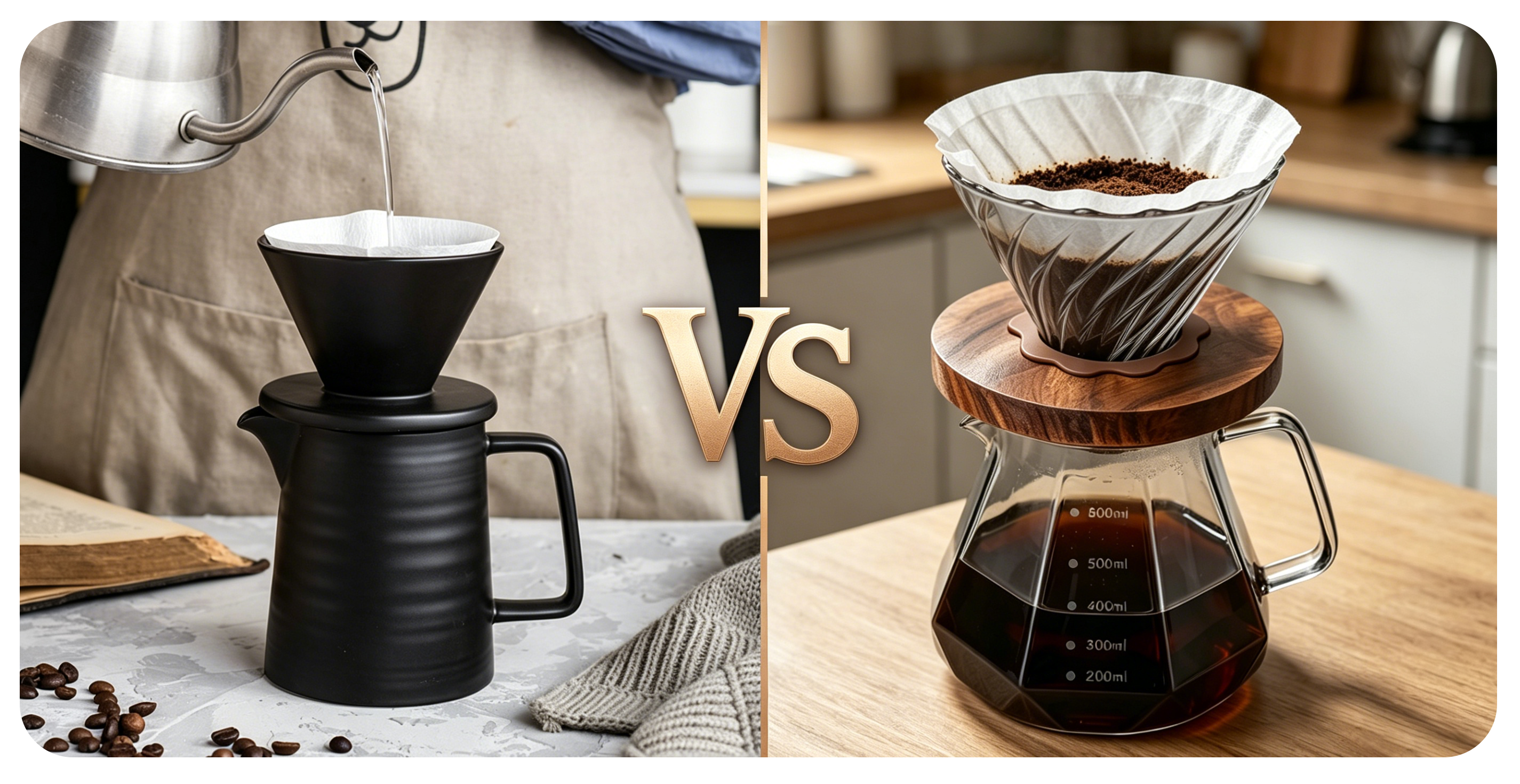
Hey coffee folks, I've been using both borosilicate glass and ceramic V60 sets behind the counter and at home for years. They look similar at first glance, but once you brew with them daily, you'll notice real differences. Let me break it down the way I'd tell a fellow barista.
Bottom line: Glass is quicker to handle day-to-day. Ceramic is more forgiving for temperature stability, but you'll build forearm muscles.
Short answer: yes, but only if you don't adjust your method.
Because it loses heat faster, the slurry temperature (water + coffee grounds) can drop by 3–5°F during a 3-minute brew. That can lead to slightly under-extracted coffee – think brighter acidity, maybe a bit thin. But if you like light roasts and want to highlight fruity notes, that's actually nice.
Pro tip: Brew with water just off the boil (205°F) and don't let the kettle sit too long. Glass works great for fast, small cups.
The heat retention means a more stable extraction. You get sweeter, fuller body, and more consistent results. Medium to dark roasts shine here – chocolatey, nutty flavors come out clean. The risk is overheating if you use boiling water and preheat aggressively. Then you might get bitterness.
Barista's take: If you brew one cup at a time and use light roasts, glass is fine. If you brew for two or like dark roasts, ceramic wins.
It's all about the show. Watching coffee bloom and drip through clear spirals is satisfying. Perfect for pour-over stations where customers or guests can see the process. Pairs well with wood or metal stands.
Downside: Glass can look plain without good lighting. Water spots and fingerprints show easily – you'll wipe it down often.
This is the "art piece" of the two. Glazed finishes, matte or shiny, tons of colors. A ceramic set can match your kitchen tiles or stand out as a statement piece. The server also feels more substantial – more like a teapot.
Downside: You can't see the coffee level through the ceramic server unless it has a glass window or markings. So you might over-pour.
My two cents: Glass for a modern, minimal look. Ceramic for warmth and personality.
Lighter and thinner. I've thrown a glass V60 into a padded camera bag with no issues. But it's still glass – one hard knock against a metal camping mug and you're picking shards. For home storage, stackable glass sets save space. The borosilicate material is actually quite tough (won't crack from sudden temp changes), but impact can break it.
Heavy and bulky. I wouldn't take ceramic camping or to a friend's house unless I drive and wrap it in towels. The glaze can chip if it knocks against other stoneware. Storage? You need dedicated shelf space – can't stack much. However, some ceramic drippers have thicker walls that feel indestructible for daily drops (like onto a rubber mat). But overall, ceramic stays in the kitchen.
Honest advice: Glass is your travel buddy. Ceramic is your homebody.
| Aspect | Glass (Borosilicate) | Ceramic |
|---|---|---|
| Weight | Light | Heavy |
| Heat retention | Low – needs preheat | High – holds steady |
| Brew style | Brighter, lighter body | Sweeter, fuller body |
| Visibility | See the coffee | Hidden (server often opaque) |
| Break risk | Shatters on hard impact | Chips or cracks, but heavier |
| Cleaning | Dishwasher safe, no stains | Dishwasher safe, but glaze can fade |
| Best for | Travel, light roasts, visual appeal | Home, dark roasts, consistent daily brew |
Choose ceramic if:
Choose glass if:
And hey, why not both? One for the counter, one for the camper. But if you're on a budget, glass usually costs less and performs 90% as well. That's the honest truth from someone who's spilled more coffee than most people have drunk.
Happy brewing.
Subscribe to receive exclusive offers, brewing tips, and updates on new products. Be the first to know about our seasonal coffee releases.
We respect your privacy. Unsubscribe at any time.